
Infrastructure Installed Without Damaging Existing Lines
Utility Trenching in North Scituate for Water, Sewer, Electric, and Telecom Installation Projects
New England frost lines extend forty-eight inches below grade, and rocky glacial till dominates Rhode Island subsurface conditions, requiring experienced operator precision to cut clean utility trenches without striking existing infrastructure. Kugler Dirtworks provides precision utility trenching for water, sewer, electric, and telecom installation across North Scituate and throughout Rhode Island, using tracked excavation equipment that maintains controlled depth and trench wall stability in variable soil conditions. The operator coordinates utility marking before excavation begins, ensuring that existing underground lines remain protected while new infrastructure gets installed at code-compliant depths.
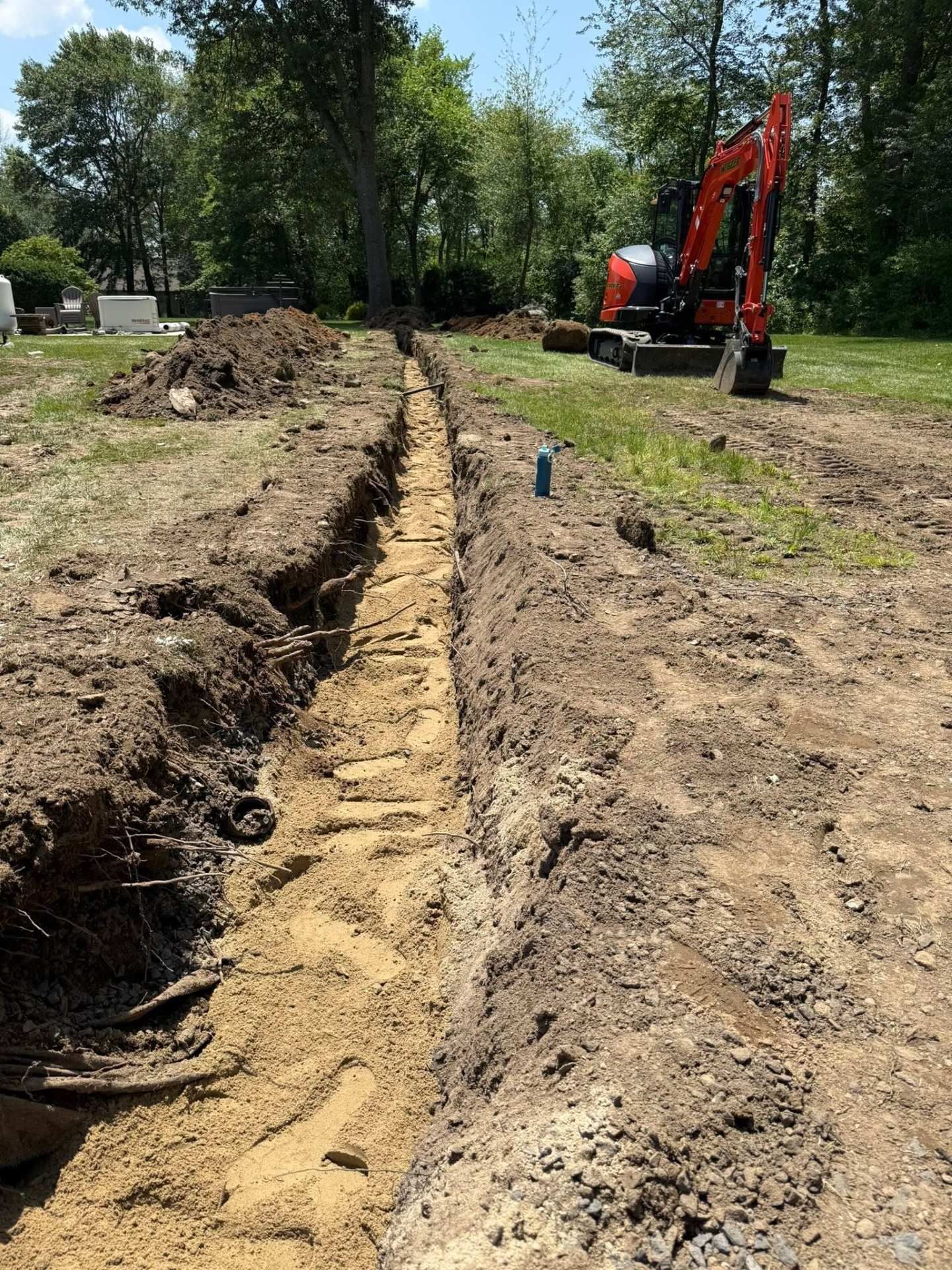
Controlled excavation produces trenches with vertical walls and consistent floor elevations that accommodate pipe bedding, conduit placement, and cable routing without requiring hand trimming or rework. The tracked equipment navigates residential properties, commercial sites, and municipal right-of-way areas, adjusting trench width and depth based on the specific utility type and installation specifications provided by contractors or engineers.
Arrange a pre-excavation consultation to coordinate utility marking and verify trench routing before equipment mobilizes..
How Controlled Excavation Addresses Rocky Terrain
Rhode Island's glacial soil contains rock fragments, boulders, and ledge outcrops that complicate utility trenching and slow excavation progress. The operator uses bucket teeth designed for rocky conditions, working methodically to separate large stones and maintain trench wall integrity. When ledge appears at required depth, the operator adjusts the approach to break or remove rock without fracturing surrounding soil, preserving stable conditions for pipe installation and backfill compaction.
Once trenching is complete, you'll see straight runs with consistent depth and width that match utility installation requirements. Trench walls remain stable without sloughing or collapse, and the floor provides level bedding for pipe or conduit placement. Clean, precise trench walls eliminate voids and soft spots that cause settling after backfill, ensuring infrastructure remains at proper grade and slope for decades of service.
The service includes coordination with utility installation crews to verify depth accuracy before pipe or cable placement begins. Backfilling occurs in controlled lifts after inspection approval, with each layer compacted to prevent future settling that damages pavement or landscaping above the trench line..
Questions Before Starting Your Project
Commercial and residential utility projects across Rhode Island generate questions about trenching logistics, timing, and coordination with installation contractors.
What happens if existing utilities appear during excavation?
Work stops immediately, the operator verifies line identification with utility marking records, and trenching resumes after confirming safe clearance distances or rerouting the trench path if necessary.
How does frost depth affect utility trenching in North Scituate?
Water and sewer lines must reach forty-eight inches or deeper to remain below the frost line, preventing freeze damage during Rhode Island winters, while electric and telecom conduits often install at shallower depths based on code requirements.
What equipment produces clean trench walls in rocky soil?
Tracked excavators with eighteen to thirty-six inch buckets cut controlled trenches in New England glacial till, with operator skill determining wall stability and floor consistency in variable subsurface conditions.
When should trenching occur during the utility installation schedule?
Excavation typically occurs immediately before pipe or conduit placement to minimize exposure time and weather impact, with backfilling following within hours or days depending on inspection requirements and installation crew availability.
What trench width accommodates different utility types?
Water and sewer trenches typically measure two to three feet wide to allow pipe bedding and backfill compaction, while electric and telecom conduits often fit in narrower twelve to eighteen inch trenches depending on conduit diameter and code spacing.
Kugler Dirtworks handles commercial and residential utility trenching year-round, drawing on third-generation equipment operator expertise and precision excavation capability. Submit a project inquiry at (401) 481-7696 to coordinate trenching logistics and utility installation scheduling.