
Sites Cleared to Building-Ready Condition
Land Clearing in North Scituate for residential and commercial properties starting development or driveway construction
Rhode Island terrain and soil conditions require experienced operators familiar with rocky, variable ground and seasonal access challenges that affect equipment choice and project timing. Land clearing removes vegetation, stumps, root systems, and debris to expose native soil and prepare the site for grading, foundation work, or roadway construction. Kugler Dirtworks clears residential and commercial land across North Scituate, Barrington, Providence, and Rhode Island towns where properties transition from wooded or overgrown conditions to development-ready sites.
The process begins with site assessment to identify tree density, stump size, buried debris, and ledge that may require drilling or breaking. Selective clearing preserves specific trees or vegetation when requested, while full clearing removes everything within the designated area. Excavation equipment pulls stumps and root balls, exposing soil that can be graded without subsurface voids. Debris removal and hauling clears the site of woody material, rocks, and old foundations, leaving clean ground ready for the next construction phase.
Arrange a clearing consultation to review your site's vegetation and soil conditions before construction begins..
What Land Clearing Actually Accomplishes
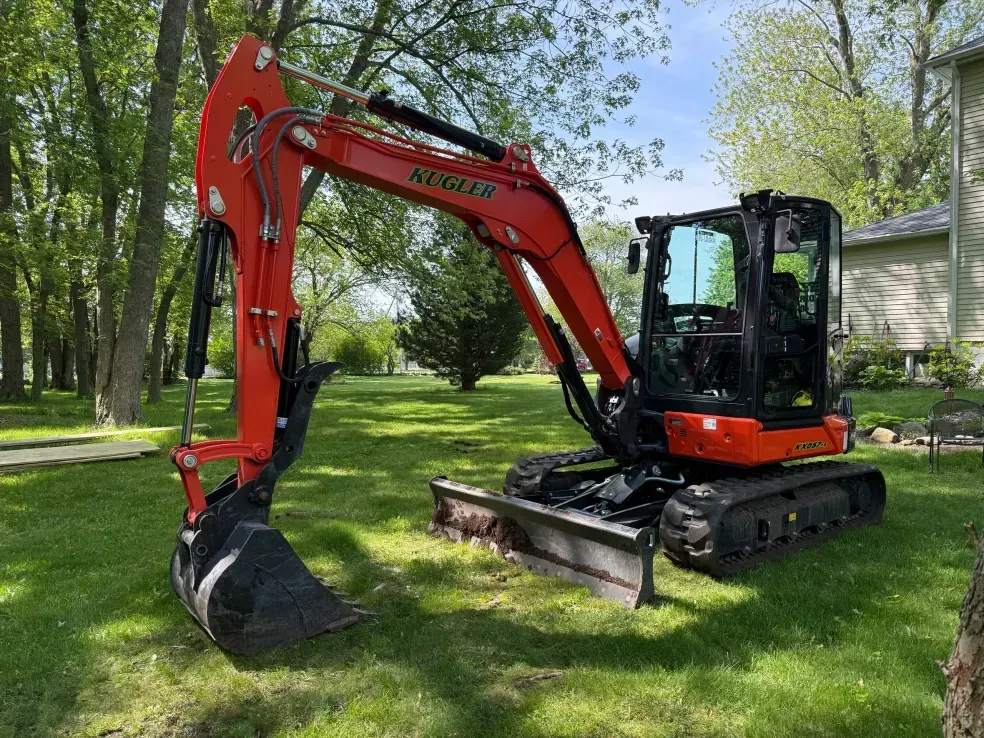
Clearing involves felling trees, cutting them into manageable lengths for removal, and using excavators to pull stumps with their root systems intact. Operators dig around large stumps to sever lateral roots before applying upward force, preventing root fragments from remaining underground where they decompose and create voids beneath future foundations or driveways. Rocks and boulders encountered during stump removal are separated for disposal or repurposing as erosion control material.
After clearing, your property has open ground with topsoil exposed and stumps removed to below grade. The site no longer has vegetation obstructing survey work, grading equipment, or drainage planning. Buried debris that would interfere with excavation or foundation work has been located and hauled away, and large root systems no longer present decomposition hazards beneath building pads or roadways.
Clearing does not include final grading or compaction, which happen during site preparation once the area is free of organic material and debris. Some properties reveal ledge or hardpan during clearing that was not visible under vegetation, requiring drilling or additional excavation before grading can proceed. Operators with year-round Rhode Island project experience anticipate these conditions and adjust equipment and timelines accordingly, particularly when working through spring thaw or late fall when ground conditions change rapidly.
Questions Before Starting Your Project
Landowners preparing for development or construction often ask about debris disposal, stump removal depth, and how clearing integrates with grading work.
What happens to trees and stumps after removal?
Woody debris is hauled off-site for disposal or processing, depending on volume and material type. Some landowners request that logs be cut and stacked for firewood, while others prefer complete removal to clear the site quickly.
How deep are stumps removed during clearing?
Stumps are pulled with their root balls to eliminate decomposition voids, typically removing material to a depth where roots no longer extend laterally beneath the building pad or driveway. This prevents settlement as organic material breaks down over time.
How does ledge affect land clearing in North Scituate and surrounding areas?
Rocky soil and ledge outcrops are common in Rhode Island, requiring drilling, breaking, or design adjustments when solid rock lies close to the surface. Operators identify ledge during initial assessment and plan equipment use and project timelines around the need for additional rock removal work.
When should clearing happen relative to other construction phases?
Clearing finishes before grading and foundation work begin, allowing operators to remove organic material and expose soil without interfering with construction equipment. Seasonal timing matters—clearing in late fall or winter minimizes ground disturbance when frozen soil supports heavy equipment better than wet spring conditions.
What remains on-site after clearing is complete?
Topsoil, subsoil, and any rock or ledge exposed during the process remain in place. Vegetation, stumps, root systems, and debris are removed, leaving clean ground ready for grading and compaction work.
Kugler Dirtworks brings three-generation family excavation expertise and childhood equipment operation experience to every land clearing project. Request a site assessment to determine clearing requirements and project timing for your property.