
Slopes That Direct Water Where It Belongs
Finish Grading in North Scituate for driveways, lots, and properties preventing water pooling and erosion
Controlled final grades prevent water pooling through harsh Rhode Island winters and spring thaw cycles, when freeze-thaw action and snowmelt test every slope and drainage path on a property. Finish grading shapes the final elevation and contour of driveways, building pads, and landscaped areas so water moves predictably away from structures and paved surfaces. Kugler Dirtworks delivers precision finish grading across North Scituate, Barrington, and Rhode Island communities where properties face seasonal drainage challenges or require exact slope specifications before paving or landscaping installation.
The process involves final elevation shaping using grading equipment that adjusts terrain in small increments, slope confirmation to verify water will flow in the intended direction, and compaction to specification so the finished surface does not settle unevenly. Drainage line verification ensures swales, culverts, and catch basins align with the graded surface before paving or planting begins. Properties graded without attention to these details often develop low spots where water collects, leading to ice formation in winter and mud pockets in spring.
Arrange an on-site grading assessment to identify slope corrections needed for your driveway or lot.
What You Notice Once Grading Is Finished
Finish grading refines what rough grading establishes, bringing surfaces to exact elevation and contour. Operators adjust high spots and fill low areas in passes, checking slope with laser levels or grade stakes to confirm water will flow at the correct angle. Compaction happens incrementally, with equipment making multiple passes to achieve density that prevents rutting or settling once paving or landscaping loads are applied.
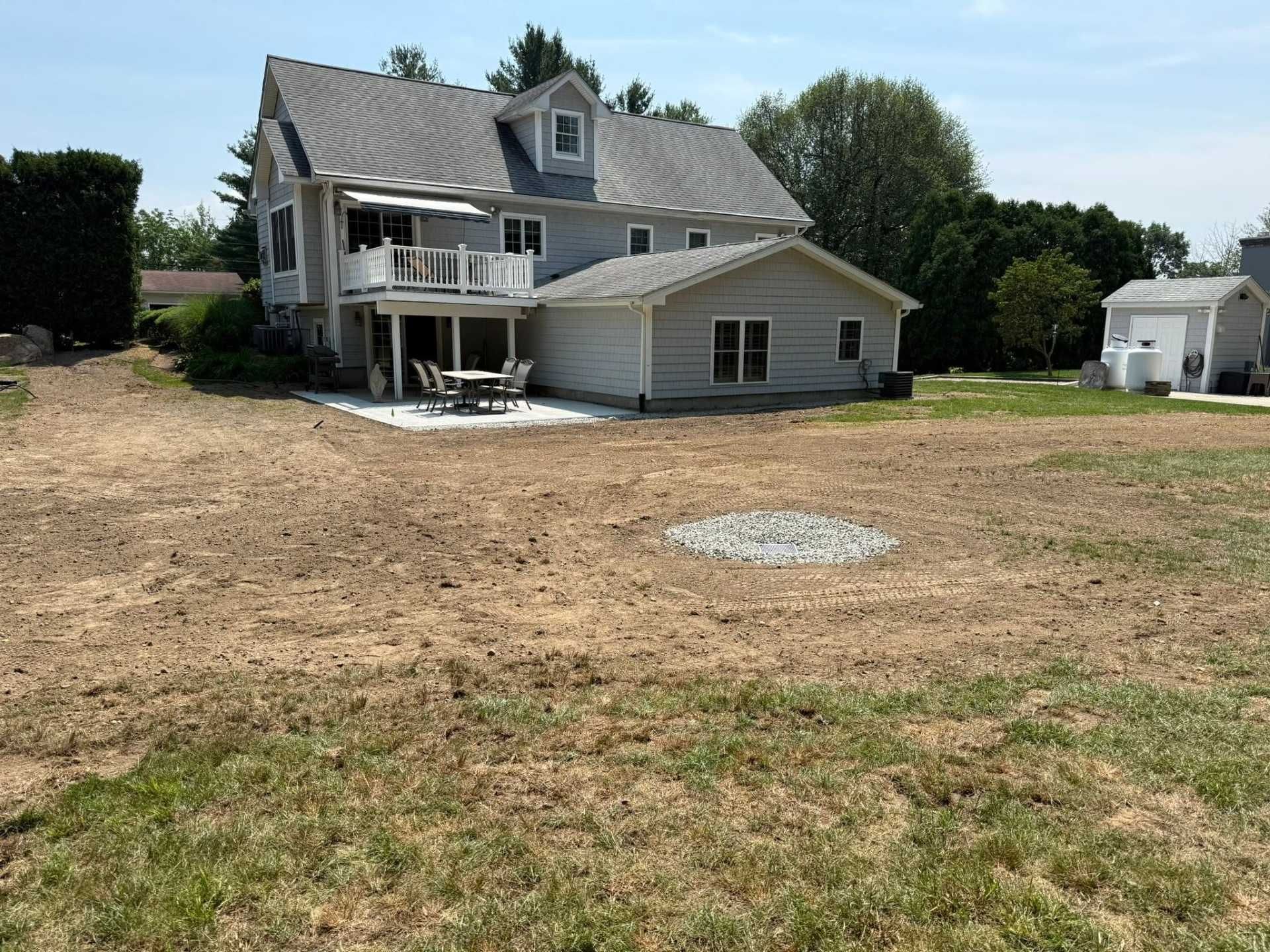
After grading is complete, your driveway or lot has a smooth, even surface with no standing water after rain. Slopes guide runoff toward drainage structures rather than pooling against foundations or walkways. The ground feels firm underfoot and does not shift when vehicles cross it, indicating proper compaction that will support pavement or sod without creating dips or cracks over time.
Grading also includes establishing transitions between different surface materials—where driveways meet lawns, where patios meet planting beds, or where swales intersect paved areas. These transitions must slope correctly to prevent erosion at edges and ensure water does not undercut pavement or wash soil onto hardscapes. Equipment operators with year-round Rhode Island project experience understand how seasonal freeze-thaw cycles affect transitions and grade them to resist frost heave and thaw settlement.
Answers to Frequent Service Questions
Homeowners preparing for paving or landscaping often ask about timing, slope requirements, and what finish grading accomplishes before the next phase begins.
What slope angle is required for proper drainage?
Most driveways and lots need a minimum two percent slope to move water effectively, meaning the surface drops at least two inches over every ten feet. Steeper slopes may be necessary in areas with heavy runoff or where drainage structures are located downhill from the graded surface.
How does finish grading differ from rough grading?
Rough grading establishes overall site elevation and major drainage paths, while finish grading refines the surface to exact specifications for paving or planting. Finish work adjusts elevations in small increments and verifies that slopes match design requirements before final materials are installed.
When should finish grading happen relative to paving?
Grading should finish immediately before paving begins, allowing minimal time for erosion or settlement to alter the surface. In North Scituate and surrounding Rhode Island towns, seasonal timing affects this window—spring thaw can soften graded surfaces, requiring touch-up work before pavement goes down.
What tools verify that slopes are correct?
Laser levels, string lines, and grade stakes help operators confirm that surfaces match design elevations. Operators also observe water flow during rain to verify that drainage moves in the intended direction without pooling or sheeting across paved areas.
How is compaction tested before paving?
Operators drive equipment across the graded surface and watch for rutting or depression under load. Properly compacted ground does not shift visibly when vehicles cross it, and surface water infiltrates or runs off rather than standing in low spots created by uneven density.
Kugler Dirtworks has operated grading equipment since childhood, bringing family excavation expertise to every project. Request a grading estimate based on your lot's current condition and drainage requirements.