
Excavation That Accounts for Bedrock Depth
Basement Excavation in North Scituate for new construction and foundation projects across Rhode Island
New England bedrock depth and glacial till composition create specific challenges during basement excavation that require equipment operators to assess soil conditions in real time and adjust the excavation approach. Kugler Dirtworks handles full basement excavation for residential and commercial construction projects across North Scituate, Providence, and surrounding Rhode Island towns. The operator's ability to recognize ledge formations, manage groundwater seepage, and maintain precise elevation control determines whether the foundation proceeds on schedule and whether unexpected rock removal delays the project.
Full foundation excavation involves removing soil to the specified depth and dimensions, grading sidewalls to stable angles, and coordinating with utility contractors so water, sewer, and electrical lines enter the foundation at correct elevations. Rock-aware operators adjust the excavation sequence when ledge appears, either removing the rock mechanically or adjusting foundation depth to avoid costly blasting. Soil composition varies significantly across Rhode Island, with some areas featuring dense clay that holds sidewalls without support and others containing sandy soils that require careful slope management to prevent collapse.
Arrange an on-site consultation to evaluate soil conditions and foundation access before excavation begins..
How Basement Excavation Addresses Site Constraints
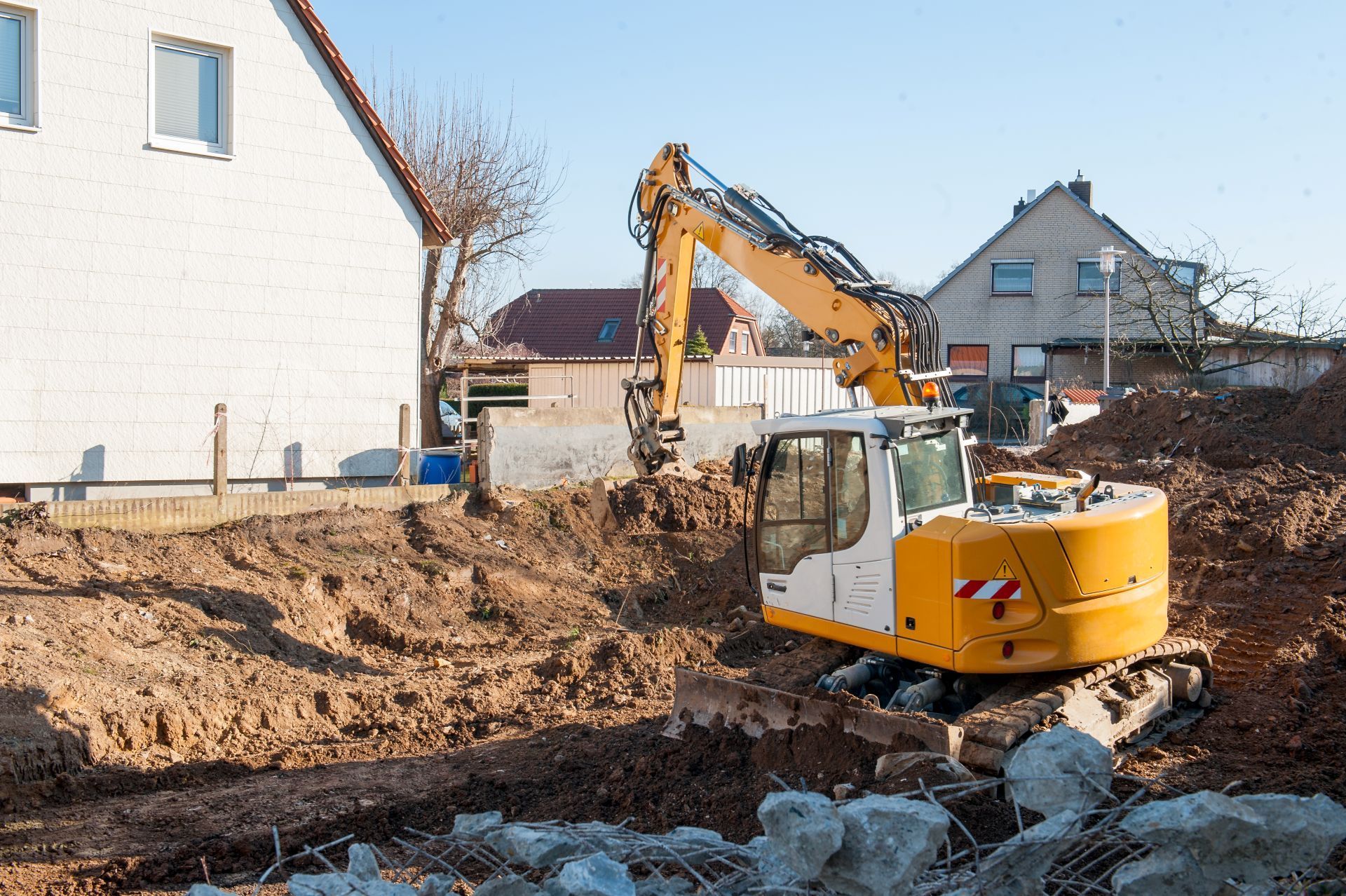
The excavation process begins with clearing and grading the building footprint, followed by sequential removal of soil in lifts that maintain sidewall stability and prevent equipment from becoming stuck in soft material. As the excavation deepens, the operator monitors for groundwater seepage, ledge formations, and soil changes that affect how the sidewalls behave and whether additional slope or dewatering is needed. Third-generation equipment operation experience allows real-time decisions about excavation angles, equipment positioning, and material handling that keep the project moving without compromising safety or foundation dimensions.
After excavation is complete, you'll notice clean, uniform sidewalls at the specified angles, a level floor at the correct elevation for footer installation, and staged soil piles positioned for backfill or removal. The foundation contractor can immediately begin footer and wall construction because the excavation dimensions match building plans and the floor elevation provides proper drainage away from the structure. Utility trenches enter the excavation at grades that allow gravity flow for sewer lines and proper depth for water service.
The work includes coordination with building inspectors to confirm excavation depth and sidewall stability before concrete work starts. Year-round access requirements mean that some excavations proceed during winter months when ground freezing affects soil behavior and equipment performance. Site conditions such as nearby structures, overhead utilities, and access routes determine equipment selection and excavation sequencing..
Common Questions About This Service
Builders and property owners planning foundation projects typically ask about excavation depth requirements, rock removal costs, and how soil conditions affect the timeline.
What happens if ledge appears during basement excavation?
The operator assesses ledge depth and extent, then either removes the rock mechanically using hydraulic hammers if the formation is shallow, or coordinates with the builder to adjust foundation depth or engage blasting contractors if solid bedrock extends below the planned excavation.
How does soil composition in North Scituate affect excavation?
Rhode Island's glacial till contains mixtures of clay, sand, gravel, and boulders that vary significantly within short distances, which affects sidewall stability, equipment traction, and whether dewatering is needed to manage groundwater seepage during excavation.
What dimensions does a typical residential basement excavation require?
Residential basement excavations typically extend eight to nine feet below grade for full-height basements, with footprint dimensions matching the building foundation plus additional clearance for forming and waterproofing work outside the foundation walls.
When should excavation happen relative to other construction phases?
Basement excavation occurs after site clearing and utility coordination but before footer installation, typically scheduled so that foundation walls can be poured and backfilled before winter frost or extended wet weather complicates site access.
What's included in full basement excavation service?
The service includes excavation to specified depth and dimensions, sidewall grading, floor leveling for footer placement, staging of backfill material, and coordination with utility contractors to ensure proper trench grades and entry points into the foundation.
Kugler Dirtworks brings consistent year-round excavation capability and third-generation operator expertise to residential and commercial foundation projects. Request a project evaluation to identify site-specific considerations that affect excavation approach and timeline.