Overgrowth Cleared Without Damaging Soil
Brush Hog Services in North Scituate for overgrown lots, fields, and properties preparing for development
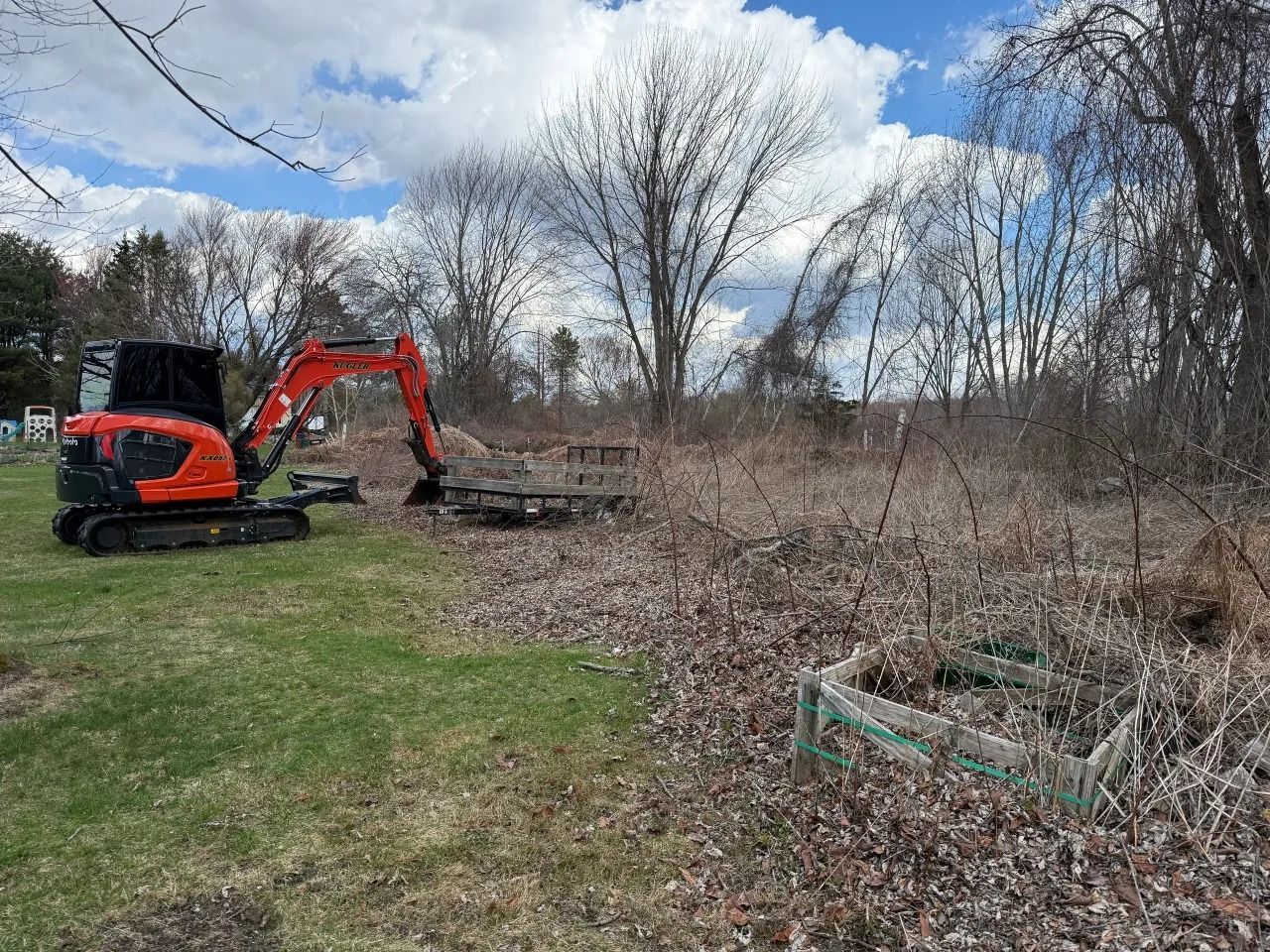
New England terrain is often dense with brush, saplings, and undergrowth that makes land unusable for building, farming, or recreation. Seasonal clearing before winter prevents fire hazards, removes tick habitat, and exposes the ground so property owners can assess drainage, soil conditions, and site layout before planning next steps. Kugler Dirtworks clears overgrown lots, fields, and brush using heavy-duty brush hog equipment across North Scituate and Rhode Island communities where vegetation reclaims unused land quickly.
Brush hog operation involves heavy-duty rotary cutting that handles thick vegetation, woody brush, and small timber without the precision cutting of forestry work or the soil disturbance of excavation. The equipment mulches material in place, leaving a cleared surface with shredded organic matter that decomposes rather than requiring removal. This approach works for properties where the goal is access and visibility rather than finished grading, and where owners want vegetation controlled without removing topsoil or altering existing drainage patterns.
Schedule a property walk-through to evaluate vegetation density and clearing requirements for your lot..
How Brush Hogging Addresses Overgrowth
The work begins with an operator assessing vegetation height, density, and stem diameter to determine whether brush hog equipment alone will handle the material or if chainsaw clearing of larger trees is needed first. The brush hog cuts through undergrowth, saplings up to several inches in diameter, and brambles that would foul lighter mowing equipment. Material is mulched on-site, reducing volume and allowing decomposition rather than requiring hauling and disposal.
Once clearing is complete, your property has open ground where previously impenetrable brush made walking or surveying impossible. The lot's topography becomes visible, exposing slopes, wet areas, and rock outcrops that were hidden by vegetation. Property lines, old stone walls, and access routes emerge, allowing you to plan development, trails, or land use without guessing what lies beneath overgrowth.
Brush hogging does not remove stumps or roots, so regrowth will occur unless follow-up treatments or grading work eliminates root systems. For properties entering development, clearing exposes the site for survey work, soil testing, and engineering assessment. For land held long-term, periodic brush hogging maintains access and reduces fire fuel load without the expense of full land clearing and grading.
Common Questions About This Service
Property owners dealing with overgrown land often ask about timing, equipment limitations, and what remains after clearing is finished.
What size vegetation can brush hog equipment handle?
Heavy-duty brush hogs cut saplings and woody stems up to three or four inches in diameter, along with thick brush, brambles, and tall grass. Larger trees require chainsaw work before brush hogging can clear the understory and smaller growth.
How does seasonal timing affect brush hog work in Rhode Island?
Fall and winter clearing, before spring growth begins, gives property owners a longer window before regrowth obscures the site again. North Scituate and surrounding towns see aggressive vegetation growth from late spring through summer, so clearing done in warm months may need follow-up within a year.
What happens to the mulched material?
Shredded vegetation remains on-site, decomposing over several months. This adds organic matter to the soil but does not provide a finished surface suitable for planting or paving. If a clean surface is needed, follow-up grading or removal work clears the mulched debris.
Does brush hogging remove stumps or roots?
No, the equipment cuts above ground, leaving root systems intact. Stumps and roots will resprout unless treated with herbicide, pulled with excavation equipment, or covered during grading work.
How does brush hogging differ from land clearing?
Brush hogging controls vegetation without removing soil or altering grade, while land clearing uses excavation equipment to remove stumps, roots, and debris, preparing the site for construction or grading. Brush hogging is faster and less expensive for properties where access and visibility are the immediate goals.
Kugler Dirtworks operates year-round across Rhode Island, bringing three generations of equipment expertise to every clearing project. Request a site evaluation to determine the best approach for managing overgrowth on your property.