
Job Sites Cleared for Next Phase Work
Material Hauling in North Scituate for Construction and Excavation Projects Generating Soil, Rock, and Debris
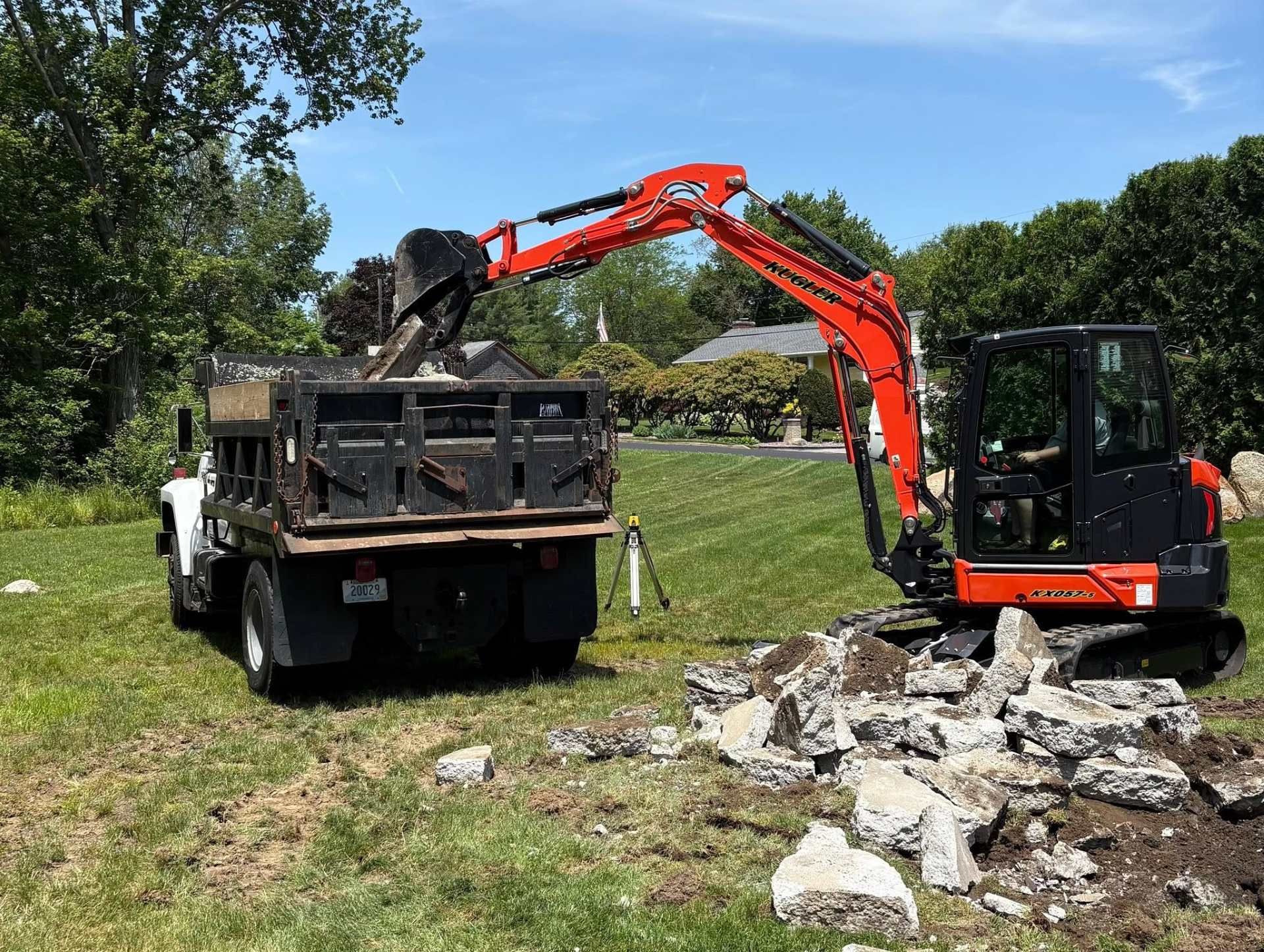
Excavated soil, rock, and construction debris accumulate quickly on active job sites, blocking equipment access and delaying subsequent work phases until material is removed. Kugler Dirtworks hauls excavated materials from residential, commercial, and municipal sites across North Scituate and throughout Rhode Island, managing on-site loading, transport, and delivery to approved disposal or reuse locations. The service integrates directly with excavation workflows, allowing site preparation and construction projects to proceed without interruption caused by material staging constraints.
Material hauling begins with on-site loading using excavation equipment that fills transport trucks efficiently, followed by route coordination to disposal facilities or delivery sites where the material will be reused. In Rhode Island's dense construction environment, efficient local disposal and delivery routes reduce turnaround time and allow multiple haul cycles within a single workday.
Schedule a site evaluation to determine material volume estimates and hauling logistics for your project timeline..
What Material Removal Actually Accomplishes
The hauling process removes excavated material that would otherwise consume workspace needed for forming, foundation work, or utility installation. Transport equipment operates in coordination with excavation schedules, arriving as material volume reaches truck capacity and departing before the next load requires staging space. Rocky material separated during excavation may be hauled to sites where it serves as fill or base material, while contaminated or unsuitable soil goes to designated disposal facilities.
Once material hauling is complete, the site workspace opens up for trades and equipment that handle the next construction phase. You'll notice clear access lanes for concrete trucks, utility crews, and material deliveries, without soil piles blocking movement or creating safety hazards. The work eliminates delays caused by staging conflicts and reduces the need for secondary site cleanup after project completion.
Material type affects disposal routing and cost, with clean fill often finding reuse opportunities while contaminated soil or construction debris requires permitted facility disposal. Hauling volume typically correlates to excavation depth and footprint area, with adjustments for rock content and moisture levels that increase material weight..
Answers to Frequent Hauling Questions
Property owners and contractors managing excavation projects often need clarity about material classification, disposal options, and hauling logistics before work begins.
What happens to excavated material after it leaves the site?
Clean soil and rock often gets delivered to sites needing fill material, while debris and contaminated soil goes to permitted disposal facilities that accept the specific waste classification.
How is material volume estimated before hauling begins?
Volume calculations use excavation depth, footprint dimensions, and soil type to estimate truck loads required, with adjustments made during the work based on actual material characteristics and compaction.
What distinguishes clean fill from material requiring disposal in Rhode Island?
Clean fill contains no construction debris, contamination, or organic material, making it suitable for reuse on grading and fill projects, while mixed or contaminated material must go to facilities equipped to handle specific waste types.
When does hauling occur during the excavation schedule?
Material removal coordinates with excavation progress, typically occurring after daily digging generates sufficient volume to justify transport costs and before accumulated material blocks further site work.
What equipment handles loading and transport?
Excavators or loaders fill dump trucks on-site, with truck capacity ranging from ten to twenty cubic yards depending on material density and haul route regulations.
Kugler Dirtworks integrates material hauling with full site preparation and excavation workflows across Rhode Island, drawing on equipment operator expertise and consistent project access throughout the region. Reach out at (401) 481-7696 to coordinate hauling logistics and disposal planning.